Finzen
Budgeting App & Expense Tracking
Track spending, manage monthly expenses, and see where your money goes. Zero-based budgeting with real-time cashflow analysis.
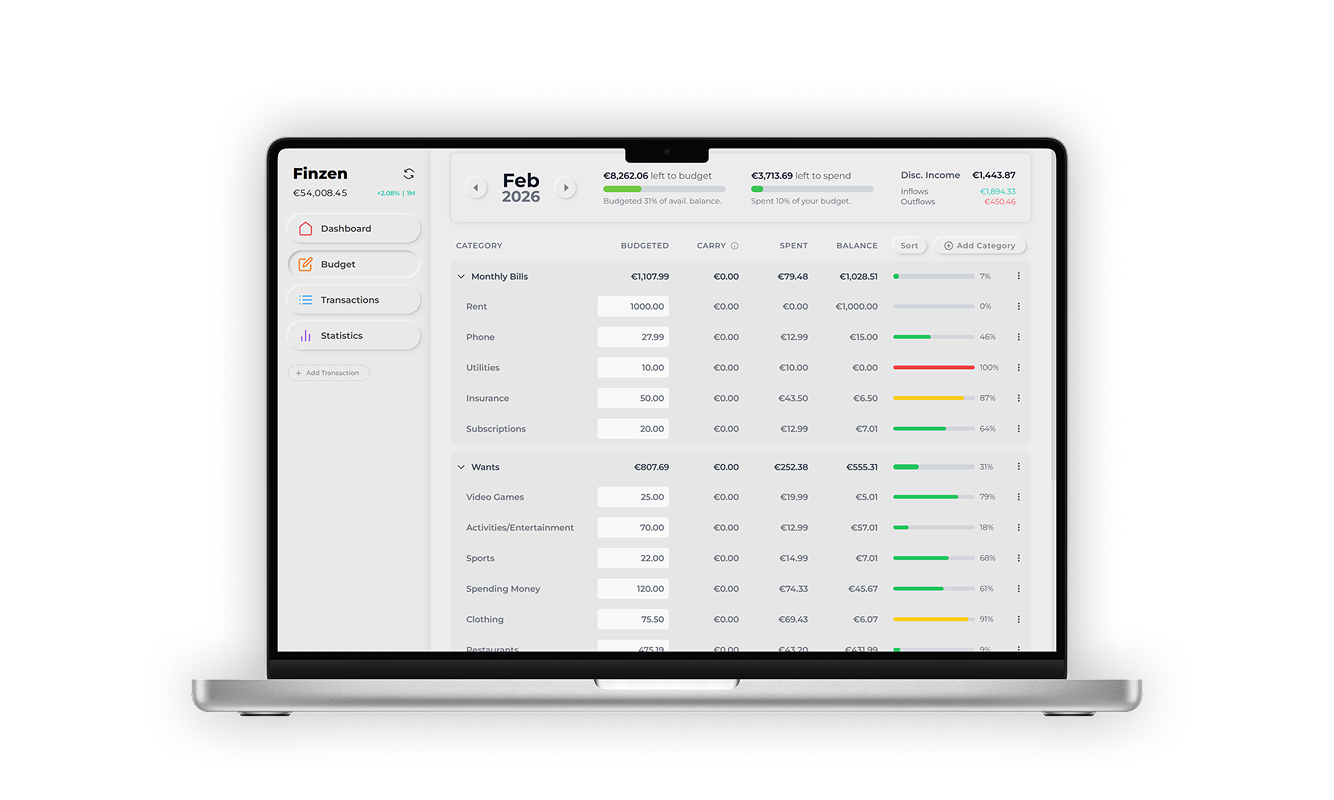
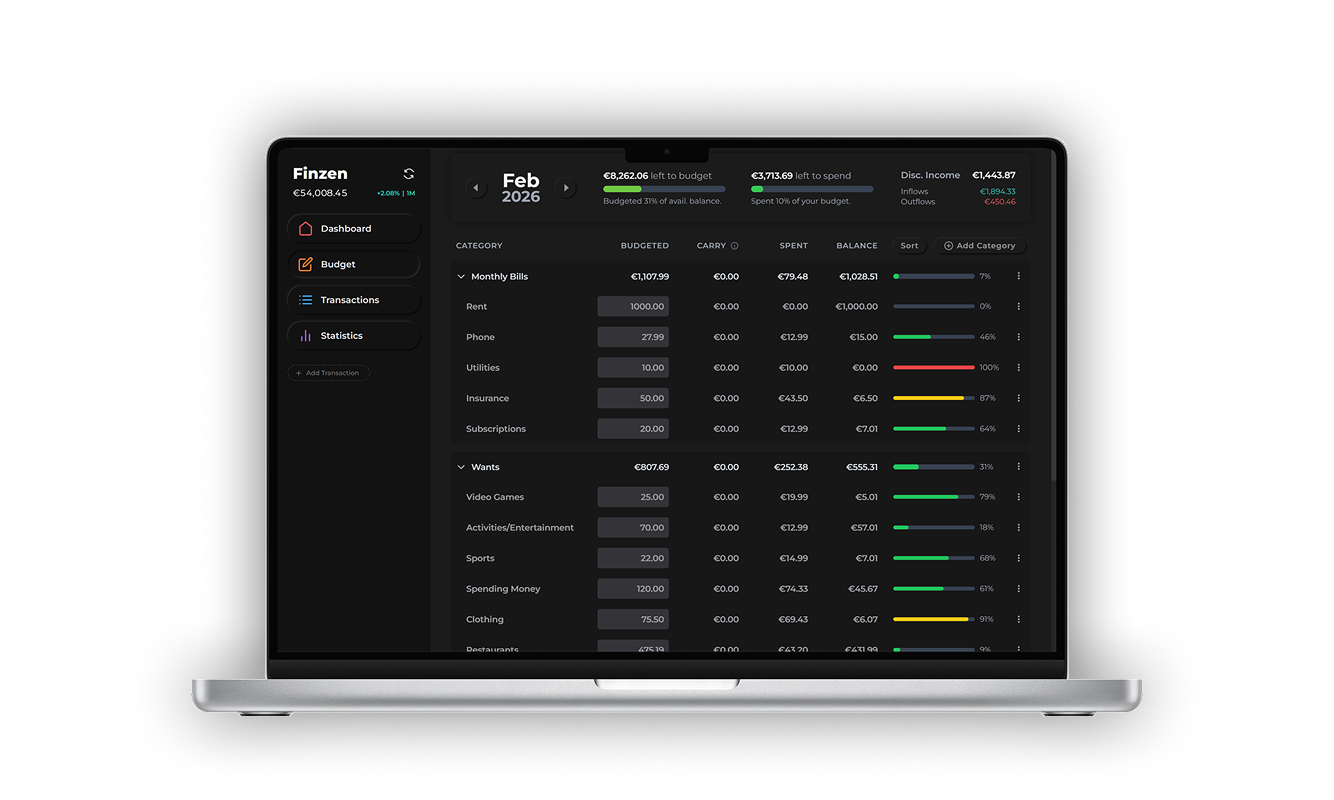
Track Spending, Manage Cashflow, Master Your Budget
Finzen is a budgeting app that teaches you to track every dollar with intention. Built around zero-based budgeting, where every dollar has a job. It turns expense tracking from a chore into a 3-minute daily habit that puts you in the driver's seat. Whether you need a budget to stop living paycheck to paycheck or you're ready to level up your spending plan, you'll learn exactly where your money goes, how to organize it across spending categories, and how to use cash flow analysis to stay ahead instead of reacting.
Zero-Based Budgeting: Give every dollar a job
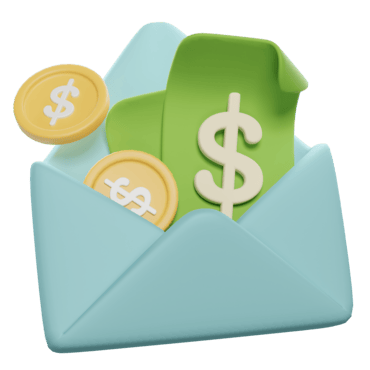
Zero-based budgeting means every dollar has a job - unlike tracking after you spend, you decide where money goes at the start of the month. It's the same idea as the classic envelope budget system: you allocate cash to envelopes (groceries, rent, fun) and when an envelope is empty, you stop or move money intentionally. Finzen brings that discipline into a digital cash envelope budgeting experience: allocate, spend down, and always see what
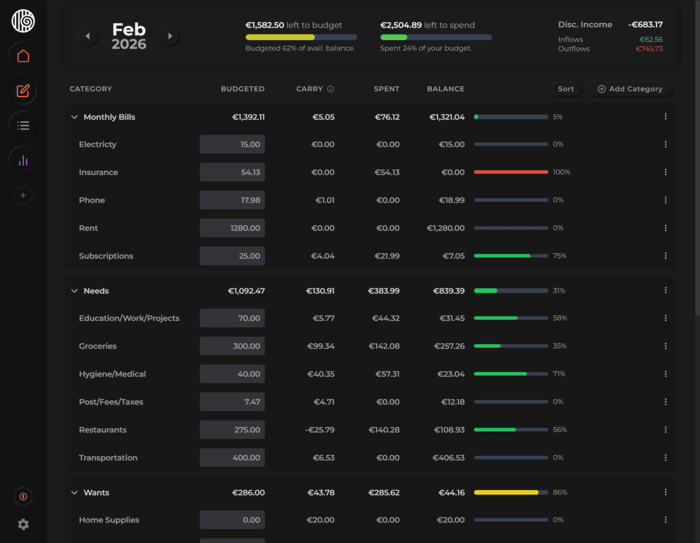
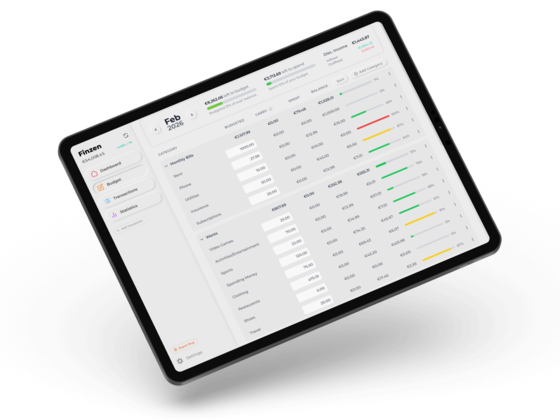
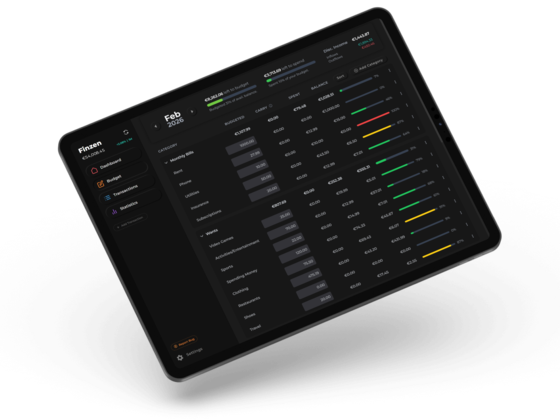
At the start of each month, use Finzen's budget planner to assign your income across spending categories until you hit zero unassigned dollars. As you track spending, each category shows exactly what's left, so you always know if you can afford something or need to pull from another envelope. This is how you finally answer where does my money go in real time instead of at month's end. Category budgeting replaces a static monthly budget template with a live spending plan that keeps you intentional instead of reactive.
Flexible categories that fit your life
-
Custom Categories
Create spending categories that match how you actually spend — not a one-size-fits-all list.
-
Starter Templates
Pre-built category sets for common budgeting styles so you can start in minutes, then tweak.
-
Subcategories
Break down broad buckets like Food into Groceries, Dining Out, and Coffee for clearer tracking.
-
Category Budgets
Set a monthly limit per category and see at a glance how much is left as you spend.
Expense Tracking That Builds Money Awareness
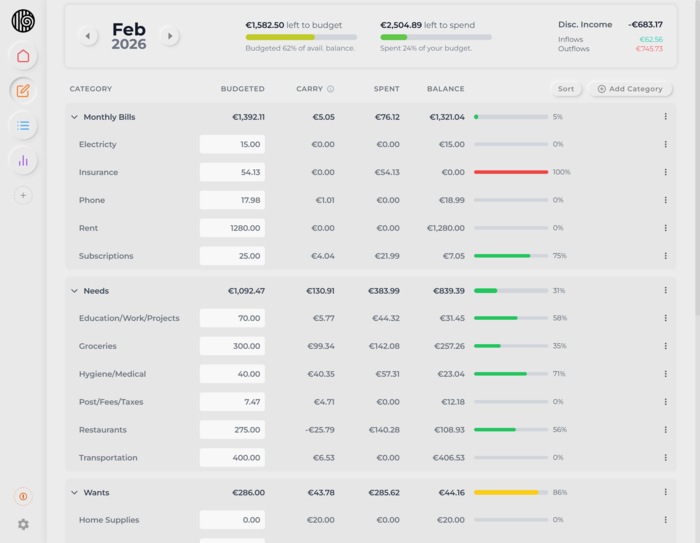
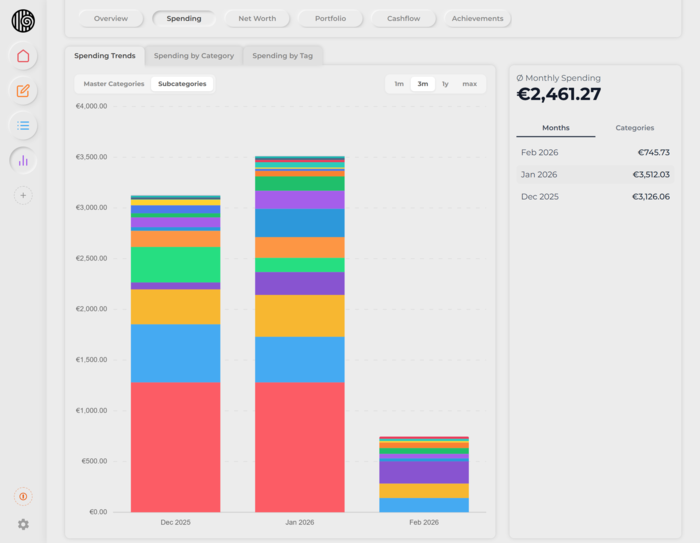
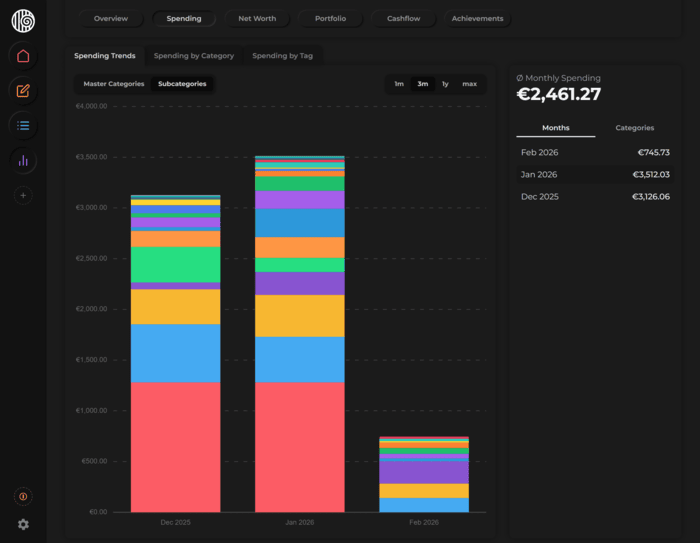
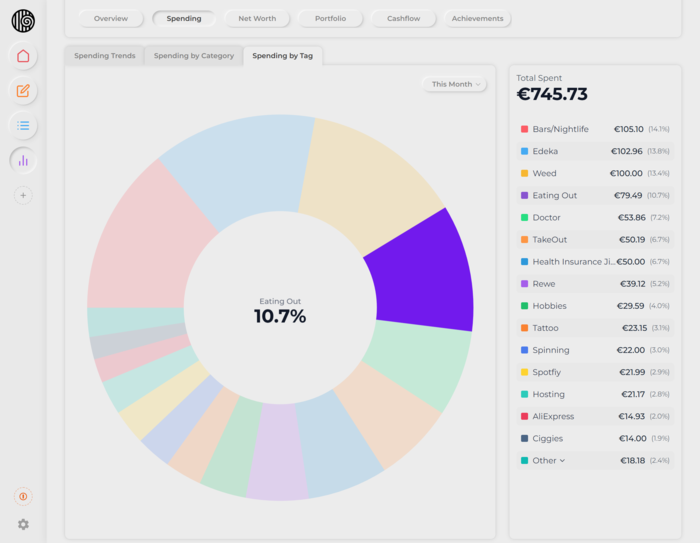
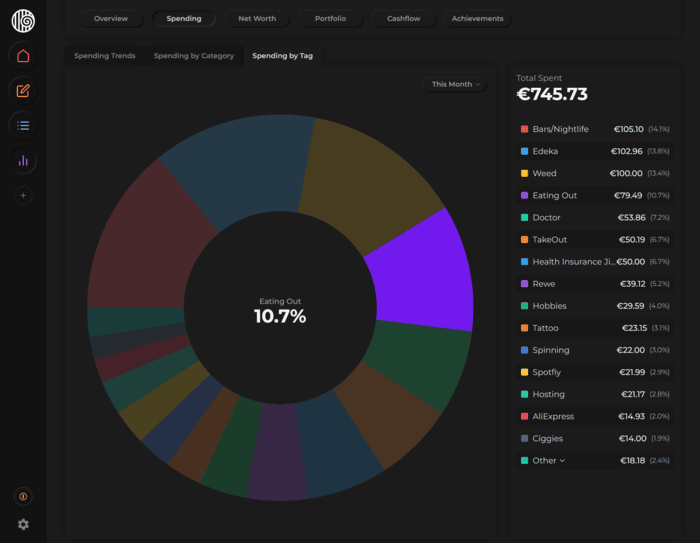
The real power comes from watching your patterns evolve. Finzen breaks down your spending habits through category comparisons, monthly trends, and visual reports that show exactly where your money goes. You start competing with last month's version of yourself: can you shave $50 off dining out? Keep groceries under budget three months in a row?
Finzen turns expense tracking into a game you actually want to win, and the scoreboard updates every time you log a transaction.
Habits that make your budget stick
Pause before you spend
When you know you'll log every purchase, you think twice. That pause keeps you inside your category limits and cuts impulse spending.
Track spending daily
2–3 minutes a day. Log each transaction and assign it to a category. You'll always know what's left in each envelope and where your money goes.
See your spending
Budget view, spending trends, and category breakdowns in one place. No guesswork - understand your budget and track your spending.
Why keep a monthly budget?
A budget isn't about restriction, it's about never being surprised by your bank account. That shift from reacting to planning gives you peace of mind and keeps you in the green instead of scrambling at month's end.
- Stay ahead of your expenses, don't chase them
- Understand your patterns so you can improve them
- Handle unexpected costs without financial panic
- Compete with last month and see trends
Cash Flow Analysis & Visual Budget Reports
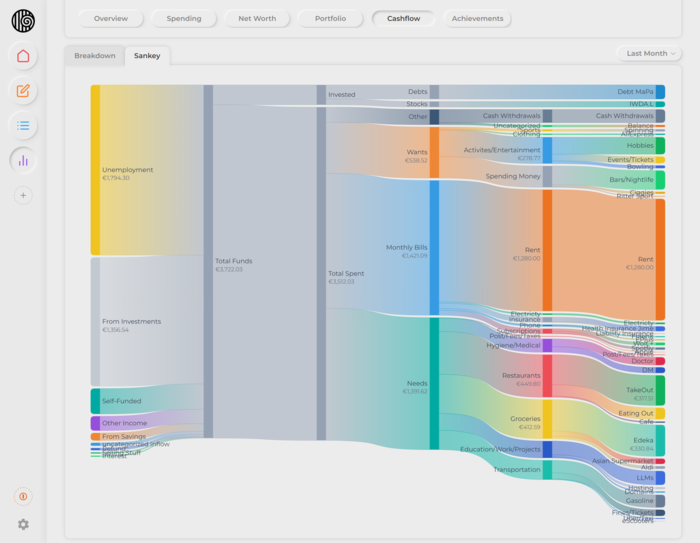
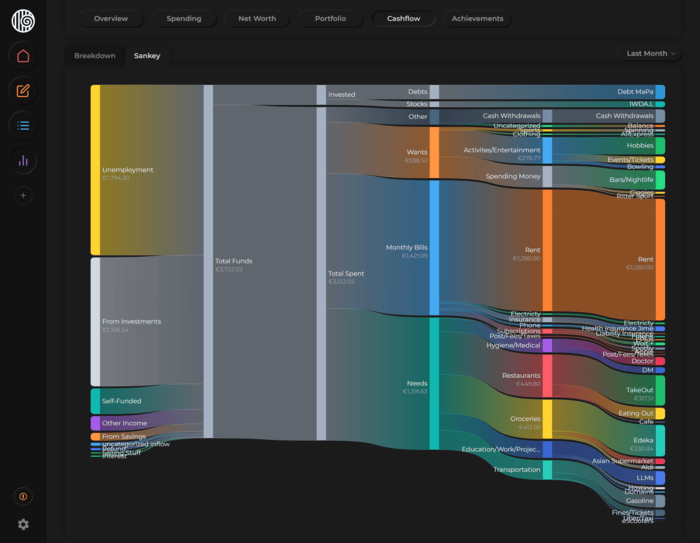
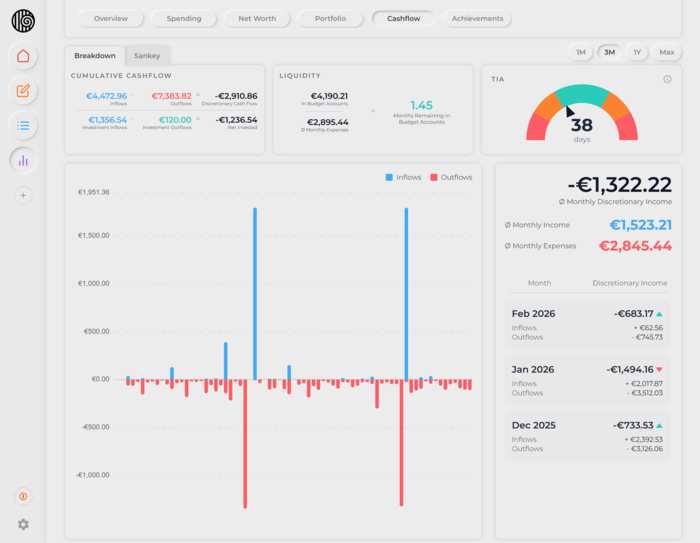
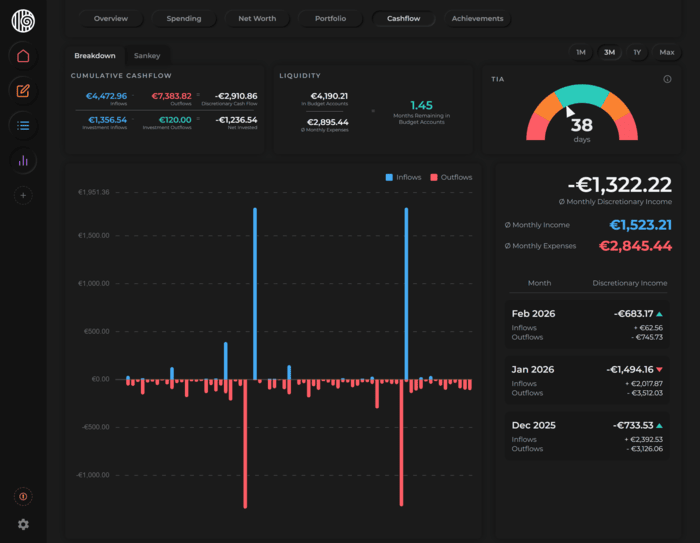
Budgeting tells you the plan. Cashflow tracking shows you the reality. Finzen's cash flow analysis breaks down your monthly spending into daily patterns, inflows vs. outflows, and shows you exactly how many months of runway you have at current burn rates.
Finzen uses visual storytelling to make your money make sense. The Sankey diagram is a money flow chart that traces every dollar from source to destination: income to categories, categories to actual expenses. Pair that with spending reports that compare month over month, expense breakdowns by tag or merchant, and monthly financial reports that show trends over time. It's budget visualization that turns raw numbers into patterns you can act on. Track where money enters, how it moves through your budget, and where it leaves.
Your cash flows become visible: what comes in, what goes out, what stays.
Your money at a glance
Finzen's dashboard gives you a complete financial overview without clicking through tabs or piecing together spreadsheets. See your budget health, monthly spending vs. plan, discretionary income, and account balances in one view. Track expenses as they happen, check category progress, and know your liquidity status instantly. This is budget management that works like a money tracker should: everything you need to stay in control, updated in real time as you log. Your entire financial picture lives in one clean interface.
From Budget Control to Investment Growth
Budget
Know your spending baseline, category limits, and cashflow. Envelope budgeting shows what's left so you know your runway and what's truly available to save or invest.
Investments
Track portfolio performance, returns, and allocation. See how investments fit with your budget and emergency fund — invest what's excess, not what you might need.
You can't build a solid investment strategy without knowing your spending baseline. How much do you need in an emergency fund? That depends on your actual monthly expenses. Can you afford to invest more this month? That depends on your cashflow. Budgeting and investing aren't separate problems. Track your spending to understand your runway, build reserves that protect your portfolio, and invest what's truly excess.
Finzen keeps it all connected so your financial decisions are based on reality, not guesses.
Common budgeting questions
-
The trick is catching overspending before it becomes a pattern. Set category limits that reflect what you actually want to spend, not what you think you should spend. When you see your dining-out category at €180/€200 by the 20th of the month, that visual feedback creates a natural pause. Track spending as it happens so you know what's left, and suddenly that impulse purchase competes with your other priorities. Financial awareness is what changes spending habits.
-
Start with one month. Log your income, create spending categories that match your actual life (rent, groceries, transport, fun money), and assign every dollar until you hit zero unassigned. Use starter templates if you need guidance. Then track spending for 30 days—just a few minutes daily. Don't aim for perfection; aim for awareness. After one month, you'll see your real patterns, and month two gets easier. Budgeting for beginners is about building the habit first, optimizing later. For more on the basics, see our personal finance guide.
-
A budget is often backward-looking: what you spent last month. A spending plan is forward-looking: what you're going to spend this month and why. Zero-based budgeting combines both. You plan at the start (spending plan), then track against that plan (budget management) as the month unfolds. The best budget software turns your plan into a live tracker so you're always comparing intention against reality.
-
Yes. Zero-based budgeting works especially well when money is tight because every dollar gets a specific job before you spend it. Start by budgeting what you have right now, not what you hope to earn next month. Assign money to must-pay bills first, then essentials, then whatever's left. Envelope budgeting shows you exactly what's available without touching money that's already allocated. Seeing your cashflow clearly is often the first step to breaking the cycle.
-
Even if you're not in financial trouble, a budget shows you opportunities you're missing. Where could you cut €100/month without noticing? Which spending categories are creeping up? How much could you actually save or invest if you were intentional? A spending plan isn't about fixing problems—it's about optimizing what's already working. People with healthy finances often benefit most from budget management because they have room to make strategic choices. Tracking monthly spending turns vague financial goals into concrete actions.
 Finzen
Take Control of Your Money
Free to get started. No credit card. Build a budget that actually works in under 10 minutes, then track spending in 3 minutes a day. See where your money goes, master your cashflow, and finally feel in control.
Continue exploring
Portfolio & Net Worth
Stocks, ETFs, crypto, forex, and commodities - all in one beautiful dashboard. Track your performance, and watch your net worth grow in real time.
Charts, Reports & Insights
Log your spending, get the full picture. Daily entries become spending flows, budget charts, portfolio views, and a net worth timeline. All in one place.
The Finzen Method
Spend 2-3 minutes a day logging your expenses and you'll understand your money better than any bank sync ever could. No automation. Just awareness.